Reading the Room Before You Enter It: Decoding Companion Profiles as Professional Documents

Most clients approach companion profiles the way they approach restaurant menus: scan for what looks appealing, note the price, and make a decision. This is an understandable instinct, but it leaves an extraordinary amount of useful information on the table.
A well-constructed companion profile is not a passive display. It is a carefully considered professional document, assembled with specific intentions by someone who understands their market, knows their preferred clientele, and has made deliberate choices about how to present themselves. Every element—the photos selected, the language used, the rate structure, the stated availability, the tone of the written description—communicates something beyond its surface content.
Clients who develop the ability to read these signals accurately gain a significant advantage: they can identify genuine compatibility before initiating contact, reduce the friction of mismatched expectations, and approach their first communication from a position of informed understanding rather than hopeful guesswork.
Photographs as a Portfolio of Intent
Photo selection is perhaps the most information-dense element of any companion profile, and it is also the element most commonly misread by clients who focus exclusively on physical appearance.
Beyond aesthetics, the photographs a companion chooses reveal a great deal about their professional positioning and their expectations of the client relationship.
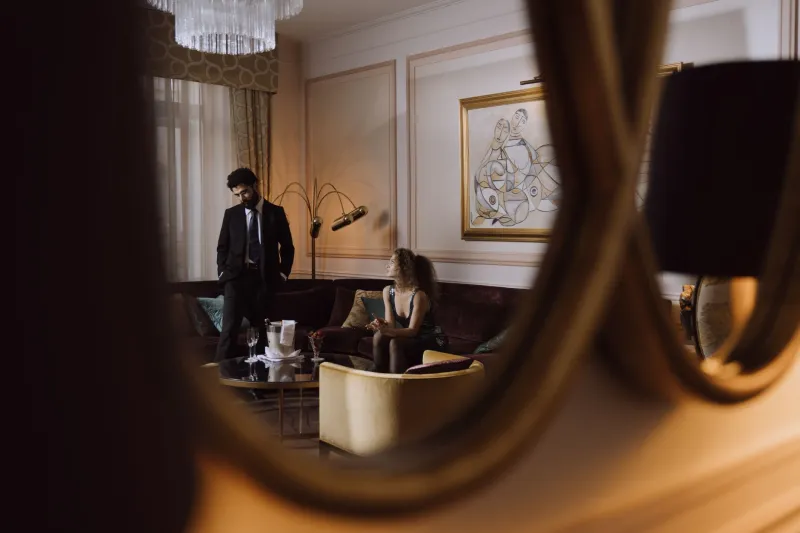
Setting and environment carry substantial meaning. A companion who presents multiple images taken in upscale hotel suites, fine dining environments, or formal event contexts is signaling an orientation toward premium, structured engagements. They are not merely showing what they look like—they are showing the context in which they expect to operate. A client who prefers casual, low-formality arrangements should note this signal carefully.
Degree of formality in presentation similarly communicates positioning. Professionally lit, styled photographs suggest a companion who invests significantly in their professional presentation and likely expects a commensurate level of investment from clients in terms of preparation, attire, and overall conduct. More casual, candid-style photography may indicate a different preference for the texture of client interaction.
Diversity of imagery across a profile—different settings, different styles of dress, varied contexts—often signals a companion who serves a range of client preferences and is comfortable across different types of engagements. A narrowly focused set of images, by contrast, often reflects deliberate specialization.
What is absent is as informative as what is present. A companion who includes no photographs in social or conversational settings may be communicating that their practice is oriented toward specific types of arrangements rather than extended social companionship. Clients seeking dinner companions or event escorts should look for profiles that include images reflecting those contexts.
Rate Structure as a Communication Tool
Pricing in the companion industry is not simply a reflection of market value—it is also a filtering mechanism. Companions set their rates not only to reflect their experience and positioning but to define the client base they wish to attract.
A companion with rates positioned at the upper end of their market is communicating several things simultaneously. They are signaling confidence in their own value. They are establishing a threshold that filters out clients who are primarily price-sensitive. And they are, implicitly, communicating an expectation about the level of professionalism and preparation they expect from clients who proceed.
Conversely, a companion whose rates are more accessible is not necessarily signaling lesser quality—they may be newer to the industry, building a client base, or simply operating in a different market segment with a different client preference profile. What matters for the client is not the absolute number but what the rate structure communicates about the nature of the relationship being offered.
Rate tiers across duration are particularly informative. A companion who offers a notably reduced per-hour rate for extended bookings is actively encouraging longer engagements—which typically indicates comfort with sustained conversation, genuine social engagement, and the kind of client who values depth over brevity. A companion whose rates scale proportionally without meaningful extended-booking incentives may be better suited to shorter, more defined arrangements.
Deposits and advance payment requirements signal professionalism and a history of managing client reliability. A companion who requires a deposit is communicating that their time has been lost to cancellations before, and that they have structured their practice to protect against that. Clients who view deposit requirements as an obstacle are misreading the signal—they are, in fact, an indicator of an organized, serious professional.
Availability Windows and What They Reveal
How a companion structures and communicates their availability is one of the most underutilized sources of profile intelligence available to clients.
A companion who maintains a consistently full schedule with limited near-term availability is, by definition, in sustained demand. This is a meaningful quality signal. It also means that clients who wish to access that companion need to plan ahead—and that failing to do so is not the companion's scheduling problem but the client's planning problem.
Advance booking requirements reflect professional organization. A companion who requests bookings 48 to 72 hours in advance is managing their schedule with intentionality. They are not available on impulse, and they are not seeking clients who operate on impulse. Clients who prefer spontaneous arrangements should look for profiles that explicitly accommodate shorter lead times rather than attempting to negotiate around stated preferences.
Stated geographic availability carries additional nuance. A companion who lists multiple cities or indicates regular travel between markets is likely experienced, comfortable with varied client contexts, and potentially accessible to clients in cities where local options may be more limited. This is particularly relevant for clients in secondary US markets who may find that traveling companions visiting from major metropolitan areas offer a broader range of engagement styles.
Profile Language as a Mirror
The written content of a companion profile—where it exists—is perhaps the most direct window into how a companion thinks about their practice and their preferred clients.
Tone matters enormously. A profile written in warm, conversational language that emphasizes connection, shared experiences, and genuine engagement is describing a preference for clients who arrive with similar orientation. A more formally written profile that emphasizes discretion, professionalism, and structured arrangements is communicating a different set of priorities.
Explicit statements about client preferences should be taken at face value. When a profile states a preference for clients who communicate respectfully, plan in advance, or approach the engagement with a particular mindset, these are not suggestions—they are the companion's articulation of what makes a booking successful for them. Clients who align with those stated preferences are far more likely to receive a positive response to their initial inquiry.
What the profile does not mention can be equally instructive. A profile that contains no discussion of social engagement, conversation, or shared interests is probably not the right match for a client seeking a dinner companion or extended social experience, regardless of how appealing the visual presentation may be.
Putting It Together: Profile Literacy as a Booking Skill
The ability to read a companion profile accurately is a learnable skill, and it pays consistent dividends. Clients who invest a few minutes in genuine profile analysis—considering what each element communicates rather than simply what it displays—arrive at the contact stage with a meaningful advantage.
They know whether the companion's professional positioning aligns with what they are seeking. They understand the implicit expectations embedded in the rate structure and availability windows. They can craft an opening message that reflects genuine familiarity with how the companion has presented themselves, which is itself a powerful signal of client quality.
On a platform like TimEscort, where companion profiles are assembled with care and presented for professional consideration, the information required to make a well-informed booking decision is almost always present. The question is simply whether the client is reading it.